We Use CookiesWe use cookies to enhance the security, performance, functionality and for analytical and promotional activities. By continuing to browse this site you are agreeing to our privacy policy

10 Best Thermal Imagers 2025 in the United States

#1

Winner

10.0 score

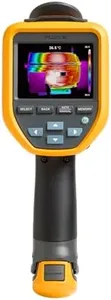
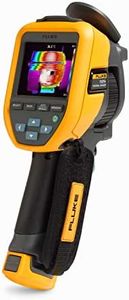
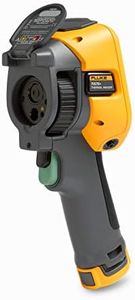
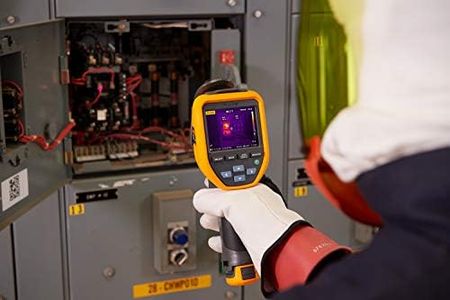
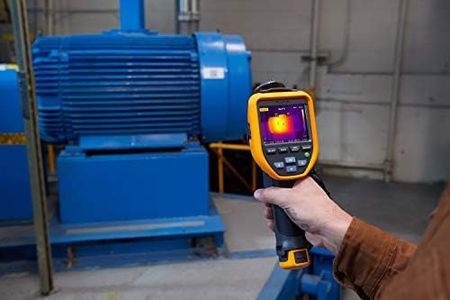
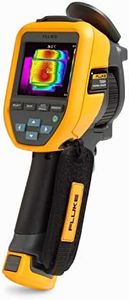
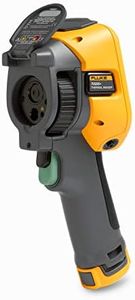
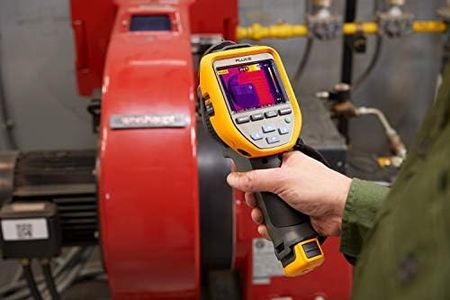
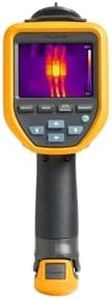
Fluke TiS75+ 27HZ, Thermal Imager

The Fluke TiS75+ is a thermal imager that stands out for its ruggedness and reliability, making it suitable for industrial settings where tools may face harsh conditions. With a tough design that can endure a 2-meter drop and an IP54 rating for water and dust resistance, it’s built to last, which is a strong advantage for maintenance professionals and field technicians.

Rating
10.0
Chosen by1,151
Resolution
Durability and Build Quality
Software and Connectivity

Most important from
2 reviews

Resolution
The thermal imager delivers impressive resolution that rivals higher-priced models, making it a solid choice for serious thermography work.
Durability and Build Quality
Its rugged build and durability make it an ideal tool for demanding industrial environments where reliability is crucial.
Software and Connectivity
The device supports practical features like asset tagging and voice annotation that streamline maintenance and inspection workflows.
#2
9.7 score

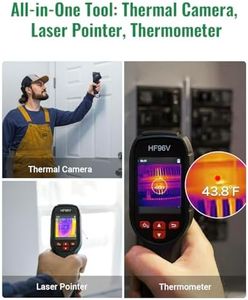
HF96V Thermal Camera with Visual Camera & Laser Pointer, Intelligent Scene Detection, 240 * 240 Super Resolution Thermal Imaging Camera,25 Hz, 50° FOV, -4°F to 1022°F, IP54 Infrared Camera
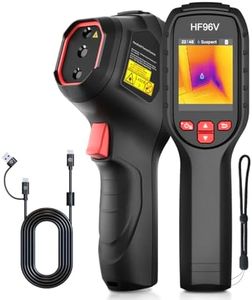
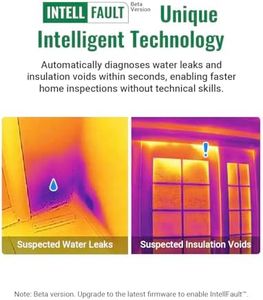
The HF96V Thermal Camera is a solid choice for those needing an affordable, versatile thermal imager for home or industrial inspections. Its dual-camera system combines a 96x96 infrared sensor with a 640x480 visible light camera, enhanced by a unique Live Super Resolution feature that boosts thermal image clarity to 240x240 in real time. This makes spotting heat differences easier, especially when paired with 7 color palettes and intelligent scene detection technology that automatically highlights issues like water leaks and insulation gaps.

Rating
9.7
Resolution
Software and Connectivity
Durability and Build Quality

Most important from
937 reviews

Resolution
Delivers vivid, graphic thermal images that make spotting insulation gaps and heat leaks straightforward.
Software and Connectivity
Intuitive operation combined with tripod compatibility and live video features enhances precision during inspections.
Durability and Build Quality
Battery life and rugged design support extended use in demanding environments without worry.
#3
9.7 score

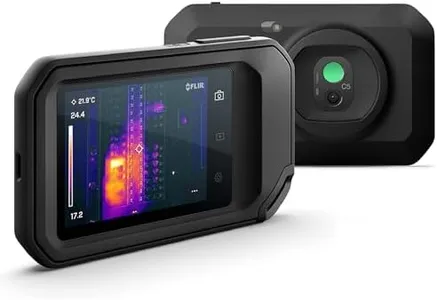
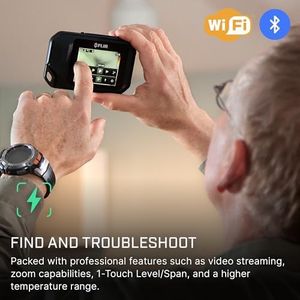
FLIR C5 Compact Thermal Imaging Camera with Wifi: High Resolution Infrared Imager for Inspection, Electrical/Mechanical, Building, and HVAC Applications

The FLIR C5 Compact Thermal Imaging Camera is a versatile tool designed for inspection, electrical/mechanical, building, and HVAC applications. It features a 160 x 120 true thermal imaging resolution (19,200 pixels), which provides a clear and detailed view of thermal patterns. The patented MSX technology enhances this by embossing visual details on thermal images, making it easier to identify and troubleshoot issues quickly.

Rating
9.7
Resolution
Battery Life
Durability and Build Quality

Most important from
1256 reviews

Resolution
Offers good battery life and adequate resolution for most applications; getting closer to the subject enhances clarity.
Battery Life
Offers good battery life and adequate resolution for most applications; getting closer to the subject enhances clarity.
Durability and Build Quality
Well made, rugged, with good performance and easy-to-navigate software menus.
Software and Connectivity
Well made, rugged, with good performance and easy-to-navigate software menus.

Top 10 Best Thermal Imagers 2025 in the United States

#1

Winner

10.0  score

Fluke TiS75+ 27HZ, Thermal Imager

Durability and Build Quality: IP54 rating, 2-meter drop
Software and Connectivity: Asset tagging, voice annotation, connectivity

Chosen by 1151 this week

HF96V Thermal Camera with Visual Camera & Laser Pointer, Intelligent Scene Detection, 240 * 240 Super Resolution Thermal Imaging Camera,25 Hz, 50° FOV, -4°F to 1022°F, IP54 Infrared Camera

Resolution: 96x96 IR, 640x480 visible, 240x240 SR
Temperature Range: -4°F to 1022°F
Field of View (FOV): 50°
Image Fusion: Dual camera, visible and thermal
Battery Life: Up to 11 hours
Durability and Build Quality: IP54, 6.6ft drop tested
Software and Connectivity: Software for analysis, built-in storage

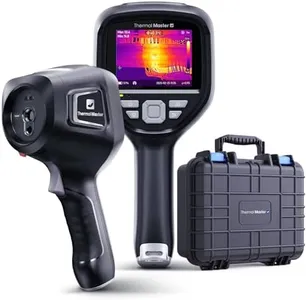
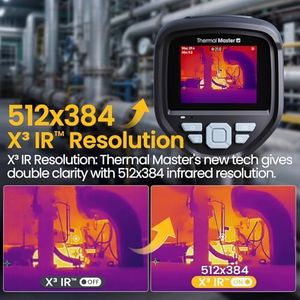
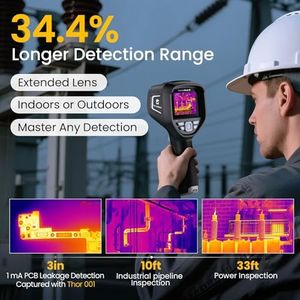
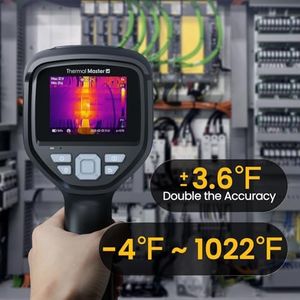
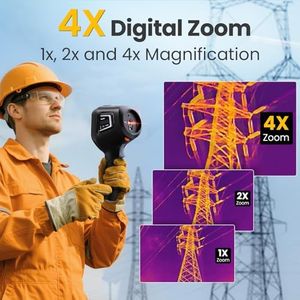
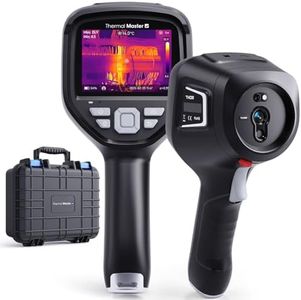
Thermal Master Handheld Thermal Camera, 512×384 X³IR Resolution, Thermal Imaging Camera with 2MP Visual Camera, 640×480 3.5" IPS Screen Thermal Imager with Laser, -4℉to 1022℉, 60Hz, 40mK(Thor 002)

Resolution: 512×384 pixels
Thermal Sensitivity (NETD): 35mK
Temperature Range: -4℉ to 1022℉
Field of View (FOV): 4.3mm lens, 4X digital zoom
Image Fusion: 2MP visible camera fusion
Battery Life: Up to 10.5 hours, fast charge
Durability and Build Quality: IP54, survives 2m drops
Software and Connectivity: USB and WiFi connections

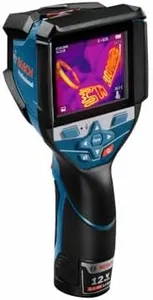
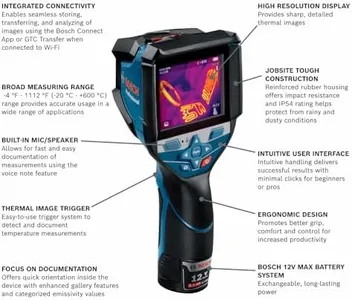
Bosch GTC600C 12V Max Connected Thermal Camera

Resolution: 256x192
Temperature Range: -4 °F to 1112 °F
Image Fusion: Supported
Battery Life: 12V Max rechargeable battery
Durability and Build Quality: IP54 rated for dust, water
Software and Connectivity: Wi-Fi, Bosch ThermalOn App

Fluke FLK-TIS60+ 30HZ, Thermal Imager; GT1; 30 HZ

Image Fusion: IR-Fusion
Battery Life: 2 Lithium Ion batteries
Durability and Build Quality: strong
Software and Connectivity: Fluke Connect

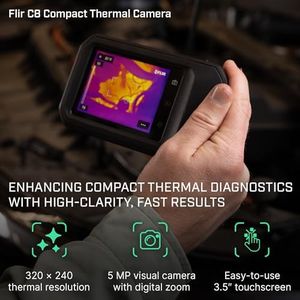
FLIR C8 Compact Thermal Imaging Camera: High Resolution Infrared Imager (320x240) for Inspection, Electrical/Mechanical, Building, and HVAC Applications
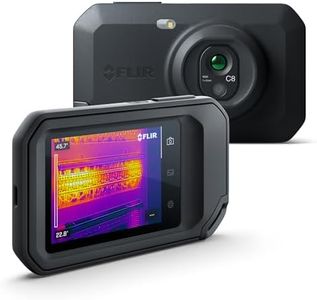

Resolution: 320x240 pixels
Field of View (FOV): 35° horizontal
Image Fusion: MSX image enhancement technology
Durability and Build Quality: 2 years parts/labor, 10 years detector
Software and Connectivity: Direct upload to FLIR Ignite cloud

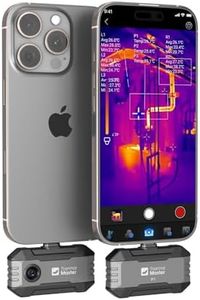
Fluke TC01C 25Hz - iSee Mobile Thermal Camera for iOS Smartphones Type C, Temperature Range up to 1022°F

Temperature Range: up to 1022°F
Battery Life: 1 AA battery
Durability and Build Quality: solid, per Fluke’s reputation
Software and Connectivity: connects iOS via Type C

Fluke TIS20+ MAX 9HZ, Thermal Imager

Image Fusion: Fluke IR-Fusion tech
Battery Life: over 10 hours
Durability and Build Quality: 2-meter drop, IP54 rating
Software and Connectivity: Fluke Connect Asset Tagging
How do we rank products for you?

Our technology thoroughly searches through the online shopping world, reviewing hundreds of sites. We then process and analyze this information, updating in real-time to bring you the latest top-rated products. This way, you always get the best and most current options available.

headphones-stars

Buying Guide for the Best Thermal Imagers

Choosing the right thermal imager involves understanding your specific needs and how different features and specifications can meet those needs. Thermal imagers are used in various fields such as building inspections, electrical inspections, mechanical inspections, and even in medical and veterinary applications. The key is to match the imager's capabilities with the requirements of your particular application. Here are some key specifications to consider and how to navigate them to find the best fit for you.
ResolutionResolution refers to the number of pixels in the thermal image. Higher resolution provides more detail and clarity, which is crucial for identifying small temperature differences and spotting issues in complex environments. Resolutions can range from low (80x60 pixels) to high (640x480 pixels or more). For general building inspections, a mid-range resolution (around 320x240 pixels) is often sufficient. For more detailed work, such as electrical inspections or research, a higher resolution is recommended.
Thermal Sensitivity (NETD)Thermal sensitivity, or Noise Equivalent Temperature Difference (NETD), measures the smallest temperature difference the imager can detect. It is expressed in millikelvins (mK). Lower NETD values indicate higher sensitivity, which is important for detecting subtle temperature variations. For most applications, a NETD of 100 mK or lower is adequate. For more precise tasks, such as medical diagnostics or detailed research, look for a NETD of 50 mK or lower.
Temperature RangeThe temperature range indicates the minimum and maximum temperatures the imager can measure. This is crucial depending on the environment and the objects you are inspecting. For example, building inspections typically require a range from -20°C to 150°C, while industrial applications might need a range up to 600°C or more. Choose a thermal imager with a temperature range that covers the extremes you expect to encounter in your work.
Field of View (FOV)Field of View (FOV) describes the extent of the observable area the imager can capture at once. A wider FOV is useful for scanning large areas quickly, while a narrower FOV is better for focusing on specific details. For general inspections, a FOV around 45° is typically sufficient. For detailed inspections or when working in confined spaces, a narrower FOV (around 25°) might be more appropriate.
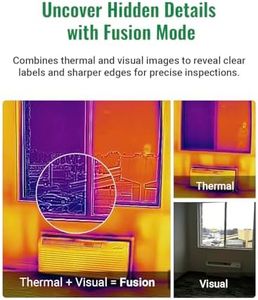
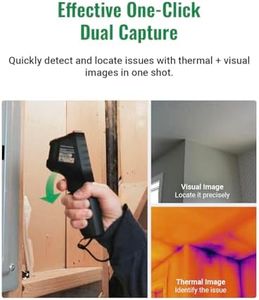
Image FusionImage fusion combines thermal images with visible light images to provide more context and detail. This feature can help you better understand the thermal data by overlaying it on a standard image. This is particularly useful in complex environments where identifying the exact location of a thermal anomaly is critical. If you need to present findings to clients or need precise location data, look for imagers with good image fusion capabilities.
Battery LifeBattery life determines how long the thermal imager can operate on a single charge. This is important for extended inspections or when working in remote locations without easy access to power. Battery life can vary from a few hours to over 8 hours. Consider how long your typical inspection sessions last and choose an imager with a battery life that exceeds this duration to ensure uninterrupted work.
Durability and Build QualityDurability and build quality are important if you plan to use the thermal imager in harsh environments or in the field. Look for imagers with rugged designs, drop resistance, and water/dust resistance ratings (such as IP ratings). This ensures that the device can withstand the conditions you will be working in and have a longer lifespan.
Software and ConnectivitySoftware and connectivity features allow you to transfer, analyze, and share thermal images easily. Look for imagers that offer user-friendly software for detailed analysis and reporting. Connectivity options like Wi-Fi, Bluetooth, or USB can facilitate easy data transfer to other devices. This is particularly useful for professionals who need to generate reports or collaborate with others.

FAQ